A bar and beer garden in Scotland moved its bookings from Dojo to Sidedoor and started using table combinations and whole-day table planning to seat large groups. From 7 September to 30 October 2026, against the same weeks of 2025, its covers rose 28%. Groups of 8 or more grew from 23% to 33% of bookings, and no-shows fell from 14.9% to 7.7%.
This case study is anonymous. It does not name the venue or its group, and it describes the venue only as far as it can without identifying it.
About the bar
The venue is a bar with a beer garden in Scotland. It takes table bookings, and a large share of them are for groups.
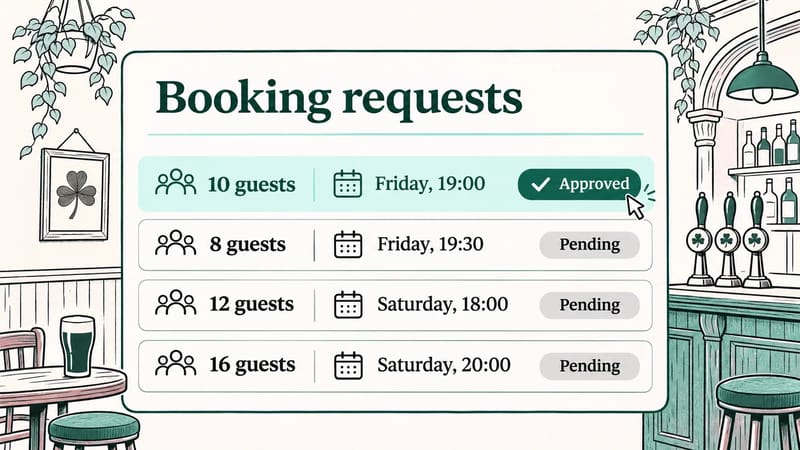
In the period this case study covers, a third of its bookings were for 8 people or more. Groups that size do not fit on one standard table, so how the venue joins tables together decides how many of them it can take.
The challenge
Large groups are hard for any busy venue to seat. Seating a big group means joining several tables, and joining tables on the night means moving other bookings around them. When that is done by hand, staff end up juggling the table plan: shuffling smaller parties to free up the right block of tables, and finding out late that a gap is too short to sell.
That puts a limit on large groups. If the plan cannot reliably make room for a party of 10, the safe answer is to turn some of them away.
What they set up
The bar moved its bookings to Sidedoor reservations and used two features together: table combinations, and whole-day table planning.
Table combinations
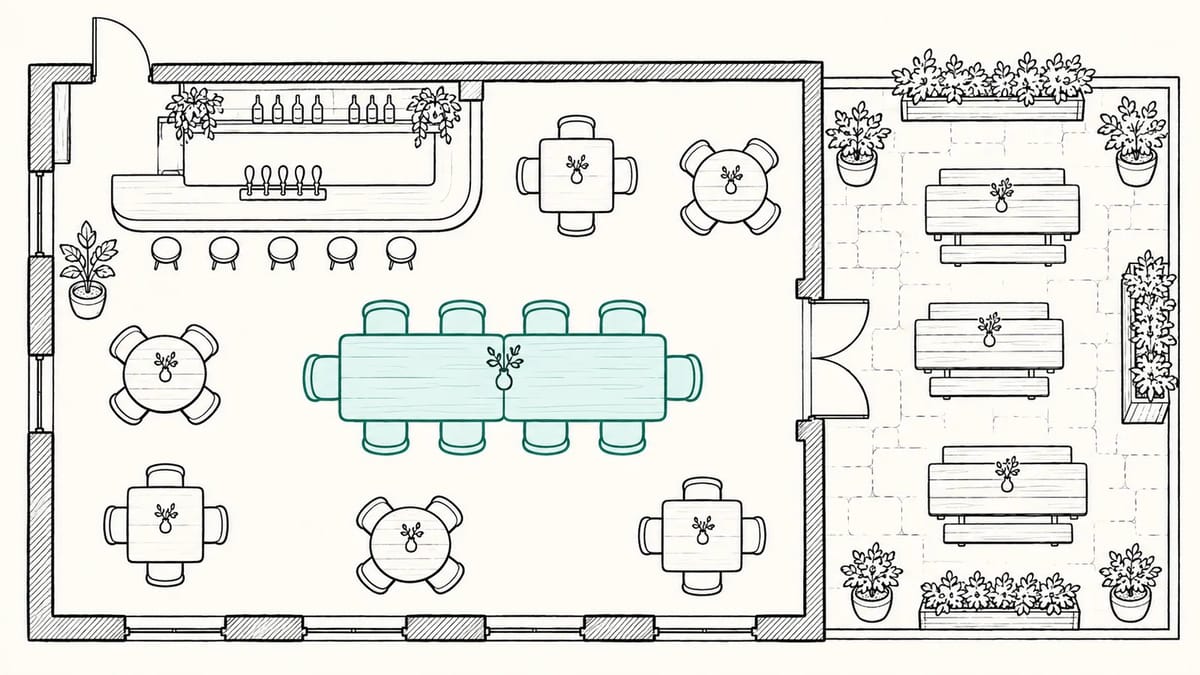
In Sidedoor, a venue selects tables on its plan and groups them into a combination. Each combination has its own name and its own capacity, so a set of joined tables becomes something that can be booked like a single table.
That means a large group is booked straight onto a combination. The team does not have to work out on the night which tables to push together; the combination is already set up, with its capacity, before the booking comes in.
Sidedoor also uses the venue’s set combinations when it picks a table automatically for a booking, so a large party can land on joined tables without anyone placing it by hand.
Whole-day table planning
Sidedoor’s smart reassignment plans the whole day’s table bookings at once, rather than placing one booking at a time. In order of priority, it:
- seats every booking it can, larger parties first when not everyone fits;
- puts each party on the smallest table or combination that fits, so the big tables and combinations stay free for big groups;
- avoids gaps between bookings on a table that are too short to sell;
- moves as few bookings as possible.
It keeps to the venue’s rules throughout. Locked bookings, including ones the guest picked a table for or that are held by a card, never move. Nor do guests who have already arrived, or tables the team has blocked. A booking stays in its seating area, and each table and combination keeps its minimum and maximum covers.
The venue can let it run once a day, an hour before the first shift or at a time it chooses. Staff can also run it on demand from the reservations screen. When they do, it first shows a preview of the moves it would make, with nothing changed, and the team chooses to apply them or cancel.
Cards on file
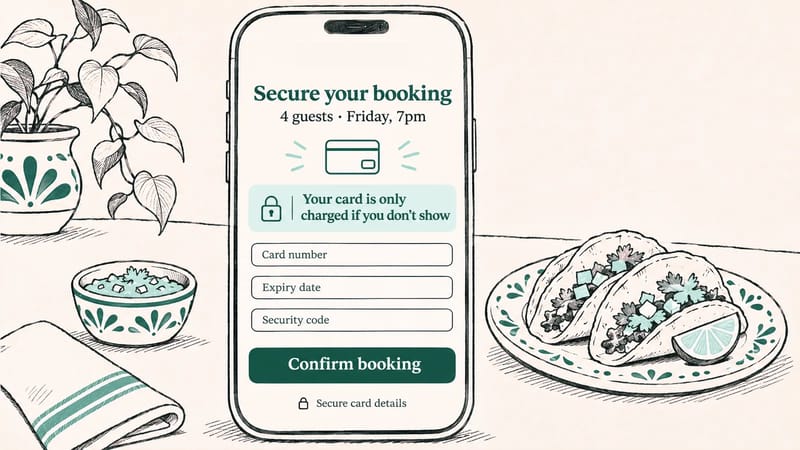
In the period this case study covers, 88% of the bar’s bookings were made with a card on file. In Sidedoor the venue sets its own rules for when to ask for a card, through payments and deposits.
The results
The bar compared 7 September to 30 October 2026, on Sidedoor, with the same weeks of 2025. Covers were up 28%, and 88% of bookings in the 2026 period had a card on file.
| Measure | Same weeks of 2025 | 7 Sep to 30 Oct 2026 (Sidedoor) |
|---|---|---|
| Groups of 8 or more, share of bookings | 23% | 33% |
| No-shows | 14.9% | 7.7% |
Covers up 28%
Across the period, the bar seated 28% more covers than in the same weeks of 2025.
A third of bookings are now large groups
Groups of 8 or more went from 23% of bookings to 33%, a rise of ten percentage points. Large groups are now a third of everything the bar books.
These are the bookings that need joined tables. With combinations set up in advance and the day planned as a whole, the bar seats them without staff rebuilding the table plan around each one.
No-shows down from 14.9% to 7.7%
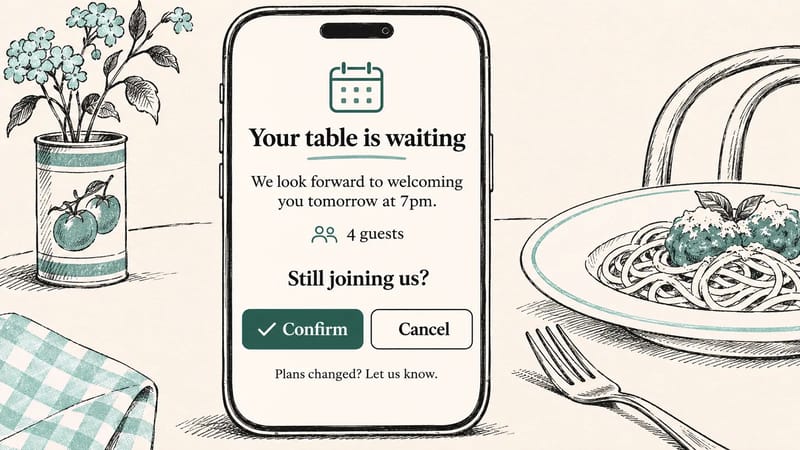
No-shows fell from 14.9% to 7.7% over the same comparison. For a venue where a third of bookings are large groups, an empty combination is several tables standing idle at once.
Over the period, 88% of bookings had a card on file. For another venue’s experience of cards on file and no-shows, see how a Mexican restaurant halved no-shows.
What other bars can take from this
If large groups are a big part of your trade, how your tables join up is worth as much attention as how guests book. A few things to check:
- Are your combinations set up before the night? If joined tables only exist once staff push them together, every big booking is a manual job.
- Does each combination have the right capacity? A minimum and maximum per combination stops a party of 4 taking a block meant for 12.
- Is the day planned as a whole? Placing one booking at a time leaves short gaps and small parties on big tables. Planning the whole day keeps big tables free for big groups.
- Can you see the changes before they happen? Any tool that moves bookings should show you the moves first and leave locked bookings alone.
For more on how Sidedoor works for a bar floor, see Sidedoor for bars.
Frequently asked questions
Can a bar take bookings for large groups across joined tables?
Yes. In Sidedoor a venue groups tables into named combinations with their own capacity, and a large party can be booked onto a combination the same way a small party is booked onto a single table.
What is smart reassignment in Sidedoor?
It re-plans a whole day's table bookings at once, putting each party on the smallest table or combination that fits and avoiding gaps too short to sell. It can run once a day automatically, or on demand with a preview of the moves before anything changes.
Will smart reassignment move a booking a guest chose a table for?
No. Locked bookings, including guest-picked and card-held ones, guests who have arrived and table blocks never move. The planner works around them.
Can I move from Dojo bookings to Sidedoor?
Yes. The bar in this case study moved its bookings from Dojo to Sidedoor.
Run bookings, guest lists and events on Sidedoor.
See how it works