A city-centre Mexican restaurant in Scotland switched its bookings to Sidedoor and put the Sidedoor booking widget on its own website. Comparing the eight weeks before the switch with 31 August to 30 October 2026, online bookings rose from 36% to 43% of all bookings. That means about 1 in 5 more bookings now come in online, and 44% of bookings now carry a card on file, up from none.
This case study is anonymous. It does not name the restaurant or its group, and it describes the venue only as far as it can without identifying it.
About the restaurant
The venue is a Mexican restaurant in a Scottish city centre. It belongs to a group with sister venues.
It takes bookings online and through its team. The share that comes in online is the figure this case study follows.
The challenge
Before the switch, the restaurant and its sister venues each had a separate login.
In the eight weeks before the switch, 36% of the restaurant’s bookings came in online, so roughly two in every three still reached it some other way. None of its bookings had a card on file.
What they set up
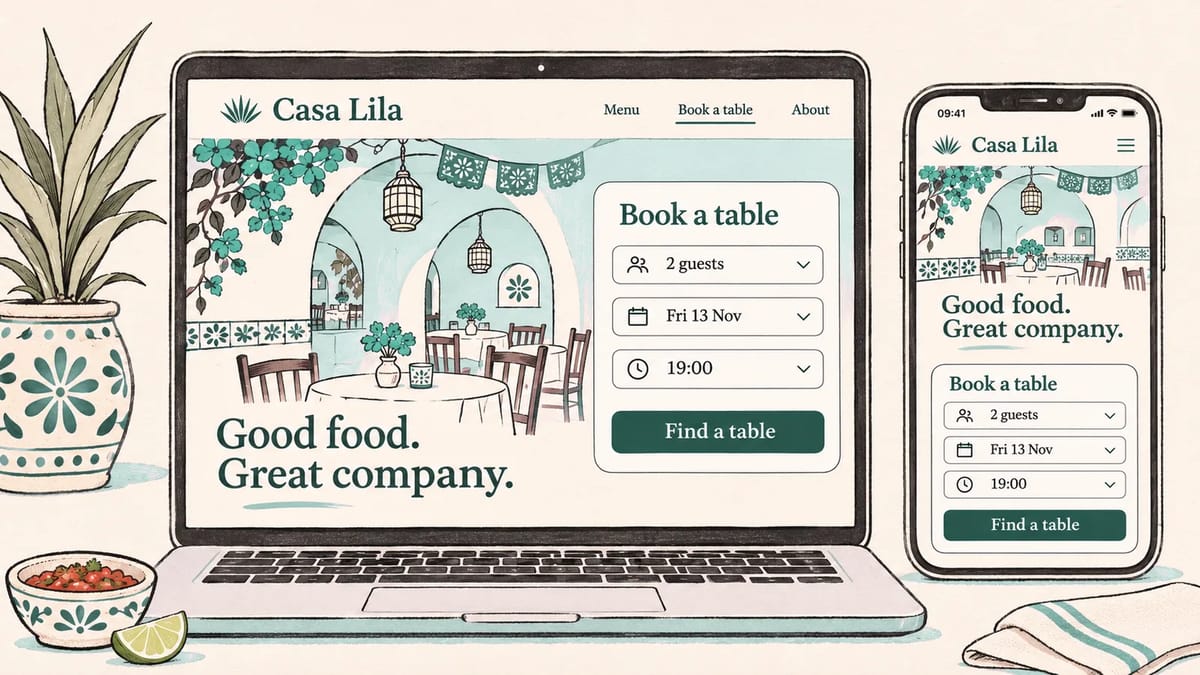
The restaurant moved its bookings to Sidedoor and embedded the Sidedoor booking widget on its own website. The widget draws on the same live availability as every other Sidedoor channel, so the restaurant keeps one book rather than a separate one per channel.
Because the widget sits on the restaurant’s own site, the guest books with the restaurant itself. Every booking lands in the venue’s own guest records with its history, and Sidedoor charges no commission on the guest relationship.
Booking on a phone
A guest opening the widget on a phone picks a date, a party size and a time. Those three choices are all it takes to get to an available table.
The table is held while the guest checks out
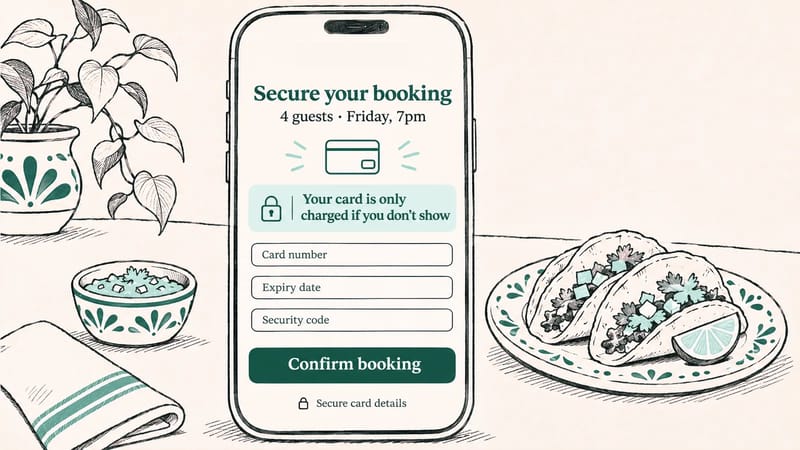
As soon as the guest picks a time, Sidedoor holds a table for them while they finish checking out. A countdown banner shows how long the table is held for, so the guest knows it is theirs while they enter their details and, where the venue asks for one, their card.
This matters most on busy nights. Without a hold, two guests can be part way through booking the last table at the same time, and one of them only finds out at the end. With the hold, the table is taken off sale for everyone else for the length of the countdown.
The booking lands on the reservations grid
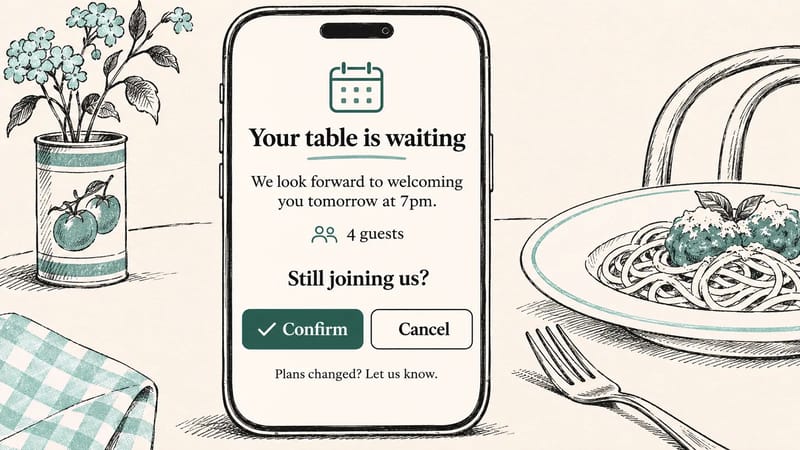
While the guest is checking out, the held table already shows on the restaurant’s reservations grid, so the team can see it is spoken for. When the guest confirms, the hold becomes the booking in place, in the same spot on the grid. If the guest walks away, the hold lapses and the table goes back on sale.
Sidedoor’s reservations and payments features sit behind this: the venue sets its own rules for tables, timings and when to ask for a card, and the widget follows them.
The results
The restaurant compared the eight weeks before the switch with 31 August to 30 October 2026.
| Measure | Eight weeks before the switch | 31 Aug to 30 Oct 2026 (Sidedoor) |
|---|---|---|
| Share of bookings made online | 36% | 43% |
| Bookings with a card on file | None | 44% |
More bookings came in online
Online bookings went from 36% to 43% of all bookings, a rise of seven percentage points. Put another way, about 1 in 5 more bookings now come in online than before.
The comparison is between two periods of the restaurant’s own booking data: the eight weeks before it switched, and 31 August to 30 October 2026, on Sidedoor.
Cards on file, from none to 44%
Before the switch, none of the restaurant’s bookings had a card on file. In the period on Sidedoor, 44% of bookings did.
In the Sidedoor widget, where a venue asks for a card, the guest gives it in the same checkout as the booking, while the table is held for them.
What other restaurants can take from this
If you want more of your bookings to come in online, the booking flow on your own website is the place to start. A few things to check on yours:
- How many taps it takes on a phone. Date, party size and time should be enough to reach a table.
- What happens while the guest pays. If the table is not held, a guest can lose it at the last step, and the booking is lost with it.
- Whether you can see bookings in progress. A table being booked online should show on your grid before it is confirmed, not after.
- Whether you can ask for a card. Your own rules should decide when the widget asks a guest for card details.
If you run several venues, it is also worth asking whether each one needs its own login. In Sidedoor, every venue in a group rolls up to one operator account.
For more on how Sidedoor works for a restaurant floor, see Sidedoor for restaurants.
Frequently asked questions
Can a restaurant take bookings on its own website with Sidedoor?
Yes. Sidedoor's booking widget embeds on your own site and draws on the same live availability as every other channel, so there is one book to manage.
Does the booking widget hold the table while the guest pays?
Yes. When a guest picks a time, the widget holds a table for them while they finish checkout and shows a countdown of the time left. The held booking shows on the venue's reservations grid.
Can I move my existing bookings to Sidedoor?
Yes. The restaurant in this case study moved its bookings to Sidedoor and now takes online bookings through the Sidedoor widget on its own website.
Can a restaurant group run all its venues from one login?
Yes. In Sidedoor every venue in a group rolls up to one operator account, rather than a separate login per site.
Run bookings, guest lists and events on Sidedoor.
See how it works